Make pension communication more personal: how to start
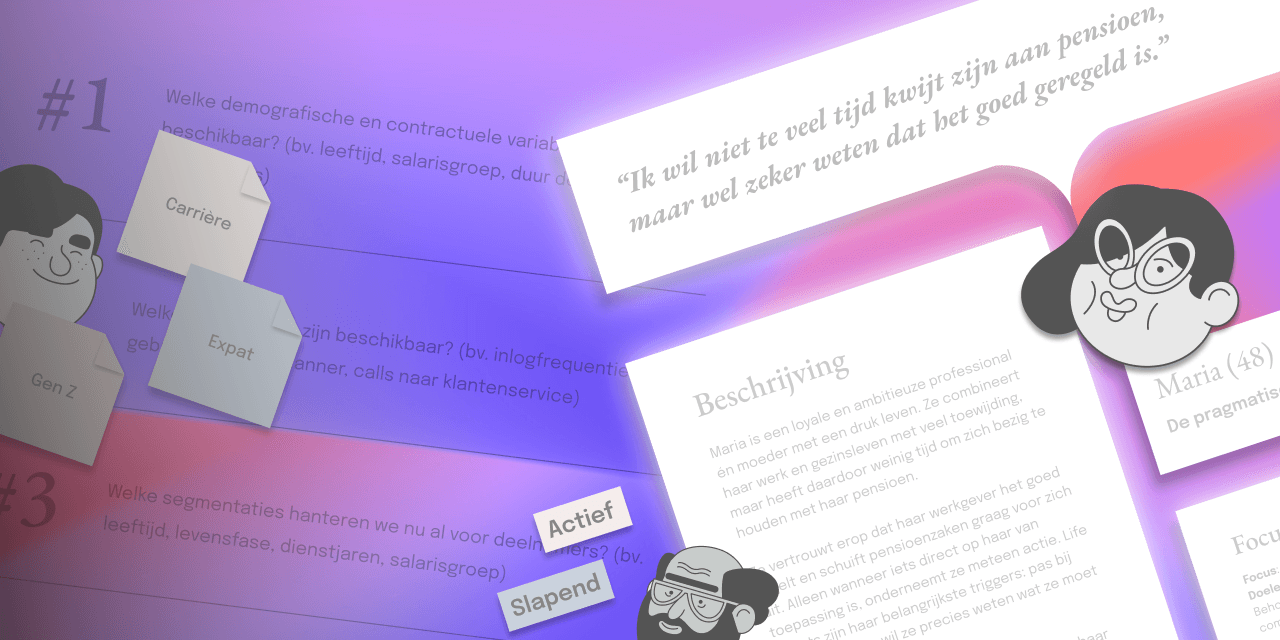
Generic pension communication? Gone are the days. It needs to be more personal and scalable. This blog explains how to achieve that.
More freedom of choice
The time pension funds got away with a single, overarching communication strategy for all participants, is now truly past. With the introduction of the new pension law (WTP) and guidelines from the AFM, it is increasingly important (read: mandatory) to provide participants with tailored support.
Participants have increasing freedom of choice and diverse expectations about their pensions. The pension system is evolving accordingly, but that also means more variation in participants' information needs and decision-making moments.
The real challenge now lies elsewhere: how do you translate this into implementation that will move all participants?
Step 1: group data into segments
True activation and conversion only happen when people recognise themselves in the message, understand why it's relevant and valuable, and know what they can do. So it's no longer about one generic message that everyone understands, but about different journeys that align with the mindset and motivation of different participants.
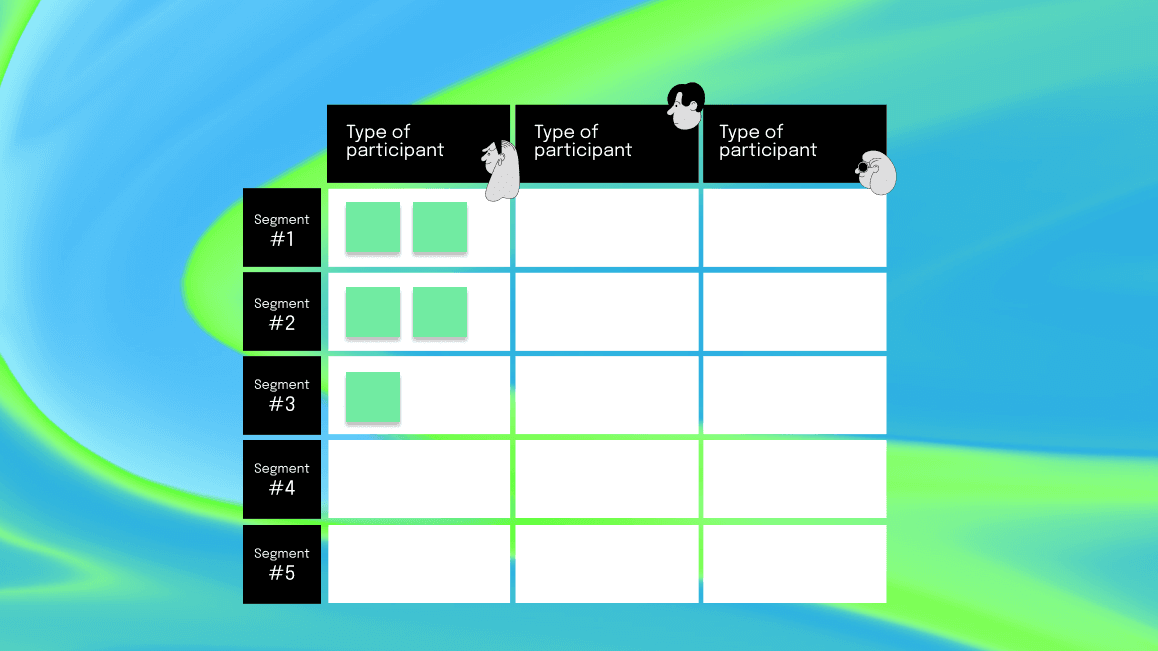
The first step to achieving this is grouping all the measurable characteristics of your participants you've collected so far, such as demographics or occupational data. This converts your entire data set into segments, giving you insight into the different groups of participants and their size.
Step 2: from segment to archetype
The next step is to add a deeper layer to these segments, based on factors like participants' motivations or emotions, to gain insight into why people do what they do. This leads to recognizable behavioural profiles that form a solid foundation for funds that want to segment their communications.
Within the pension world, you can identify several core "archetypes" that help understand participant behavior. Think of the pragmatic optimist, the young idealist, or the loyal employee.
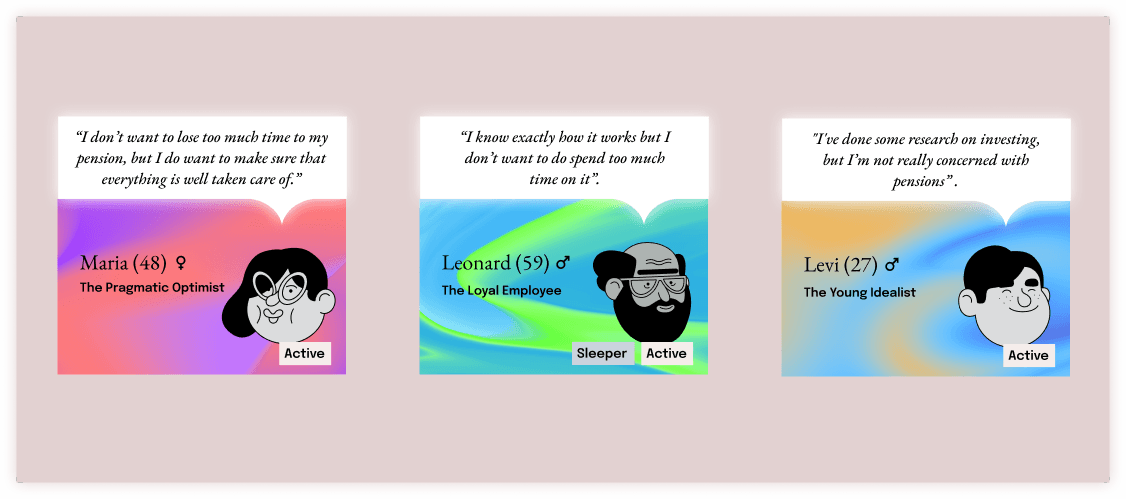
But it doesn't stop there. Each fund has its own unique color, tone, and target audience. A healthcare fund, for example, appeals to a completely different type of participant than a retail fund. By infusing the general archetypes with the DNA of your participants, you make them truly relevant. What drives your people? What are their concerns, what is their routine, and what is their attitude toward financial matters?
With targeted research, you can fine-tune them to the realities of your participants. If your archetypes are well-founded, you can anticipate how each segment responds to change, and thus design communication that not only explains but also encourages action.
AI as enabler
AI doesn't yet understand nuance like humans do, but that will improve rapidly. It's becoming increasingly feasible to use AI to make your journeys smarter and more personalized: imagine, for example, a virtual pension advisor that answers questions or adjusts the pension environment in real time based on the participant's profile and needs. This creates even more personalized journeys where the content, language, or even the sequence of steps can be adjusted in real time to users.
Curious how we're using AI for pensions?
Read more about why and how we're experimenting with technology, storytelling, and design to make pensions more relevant.
Let's get started!
Excited to work on the archetypes within your pension fund? We've got 2 options for you: